
True Stories, True Impact
A Bigger Conversation
As Blake gained confidence, deeper conversations started to emerge. He spoke about independence. About wanting his own space. About wanting more control over his money and his future. We discovered that Blake wasn’t even receiving his own Disability Support Pension. He was given very little access to his finances and had minimal opportunity to learn how to manage them. Through respectful discussions focused on capacity building, we transitioned his pension into his own account and created a structured budget system. Blake began learning about responsibility, planning, and independence. For a while, things stabilised. But then a difficult situation at home pushed Blake to his limit.
One phone call changed everything. He was upset, Overwhelmed, and emotional. Blake then said “I want to leave.” And for the first time, he truly believed that was possible.
Choosing Courage
Relocating wasn’t a small decision. It required careful planning, advocacy, and unwavering support. Blake wanted to move to Perth to live with his father, somewhere safe, stable, and supportive. We organised everything. The flights were booked. The airline was notified and arranged to provide assistance. Supports were put in place on both ends. Blake boarded that plane independently, something he had never done before. Airline staff supported him throughout the journey. He even got to visit the cockpit, take photos, and experience something completely new. When he landed, he wasn’t just arriving in a new state. He was arriving in a new chapter of his life.
Where Blake Is Today
Today, Blake is thriving. He is living in a safe, loving environment with his father and stepmother. He attends speech and occupational therapy regularly. He has enrolled in a TAFE IT course. He is connected with a job agency. He has applied for his very first job at Hoyts Cinemas. He has a consistent support worker who shows up for him every day offering stability, encouragement, and structure.
But the biggest transformation isn’t on paper. It’s in his confidence. His voice. His belief in himself. Blake now understands that he has choice and control. That his goals matter. That his future belongs to him.
Why This Matters
Supporting Blake was never about “services.” It was about advocacy. It was about empowerment. It was about building capacity, not dependence. It was about standing beside someone until they believed they could stand on their own. Watching Blake step into his independence has been more than professional work, it has been a privilege. Because when the right support meets the right person at the right time, lives change.
And Blake’s story is proof of that.
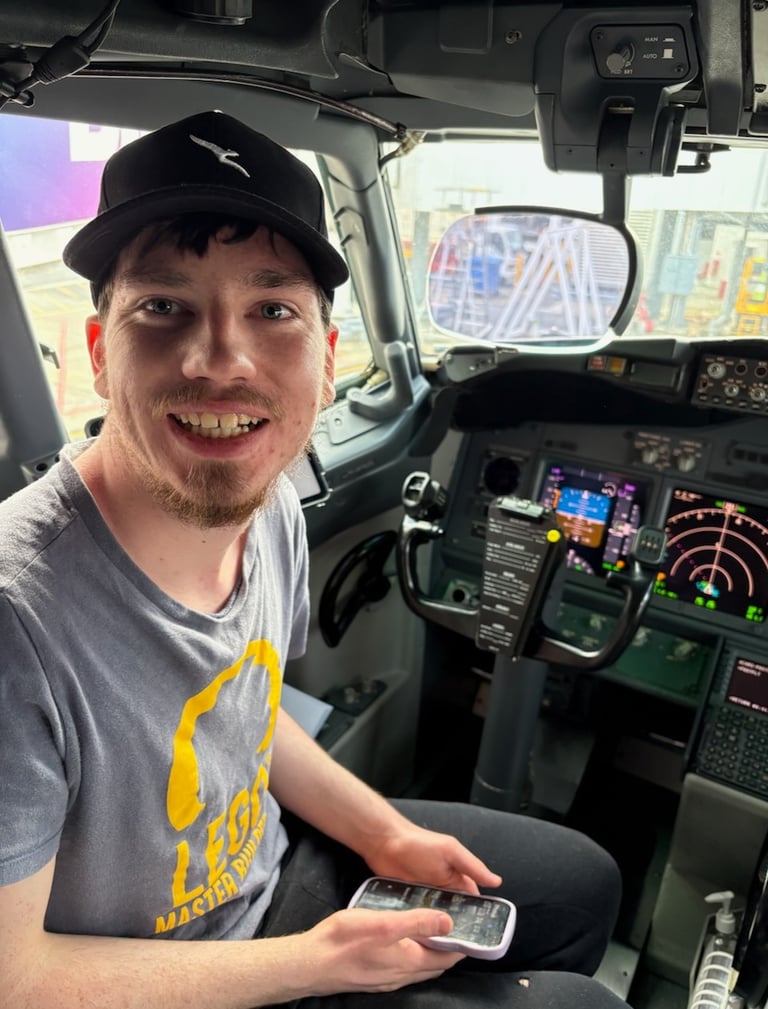
When Blake first came into our world, he wasn’t thriving, he was surviving. Behind the scenes, things weren’t working. His support was inconsistent. Different workers were turning up , or not turning up at all. His NDIS plan had simply been rolled over from his school years, with no therapies in place, no support coordination, and very little understanding of what was actually available to him. Blake had potential, He had dreams, But he didn’t have the right support around him to help him reach them. A dedicated support worker, who saw the difference between the service Blake deserved and the service he was receiving, reached out and asked if we would step in. That call changed everything.
Listening First
Before making changes, we listened: We listened to Blake. We listened to his frustrations. We listened to what wasn’t being said. As we spoke more, it became clear that Blake’s needs had been overlooked for far too long. He wasn’t accessing therapy. He wasn’t building independence skills. He wasn’t socially connected in the way he wanted to be. And perhaps most importantly, he didn’t feel in control of his own life. That had to change!
Rebuilding From the Ground Up
We began putting the right pieces into place. A physiotherapist was engaged weekly. Speech and occupational therapy followed. Blake joined a cooking class, learning skills that would one day support him to live independently. He enrolled in a craft group and began building friendships and confidence in community settings. We reconnected him with a service he had previously been told he couldn’t attend due to “lack of funding”, something that simply wasn’t true. For the first time in a long time, Blake was being given opportunities instead of limitations. And slowly, we saw something shift, He began to grow.
Blake’s Journey: From Feeling Stuck to Finding His Independence
That vision became Eyecare Support Worker Services.
Even when Cory and his mum relocated to Geraldton to be closer to family, our relationship never ended. I continued providing respite, travelling when needed, because support doesn’t disappear just because distance changes.
A new chapter opened when Cory became involved in wheelchair basketball an incredible achievement made possible by the determination of his mum, who worked tirelessly to ensure Cory could experience the same opportunities, excitement, and sense of belonging as anyone else. As Eyecare Support Worker Services grew, I was proud to sponsor the team, provide uniforms, and even have our logo displayed on Cory’s basketball wheelchair. Watching Cory play, travel, compete, and thrive in his own wheelchair was a reminder of why advocacy and the right equipment matter so deeply. Access changes everything.
Over time, Cory and his family faced further challenges. Services let them down. Providers disappeared. Promises were made and broken. Eventually, I stepped in as Cory’s Support Coordinator after a previous company vanished without handover, leaving no clear documentation, progress records, or guidance. Because I already knew Cory , his needs, his strengths, his history, was able to act immediately. I worked closely with his mum, listening not just to what supports were missing, but to the emotional toll of constantly having to fight for what her son needed. Advocacy, in this space, isn’t just paperwork, t’s holding space for families who are exhausted, frustrated, and overwhelmed. A change of circumstances was submitted straight away, clearly outlining Cory’s unmet needs and the critical equipment required for his safety, independence, and quality of life. Through persistent advocacy and detailed planning, Cory has now received funding approval for:
An electric wheelchair assist
A new walker
Physiotherapy
A falls risk and epilepsy watch
AFOs and specialised footwear
A new Functional Capacity Assessment
Some equipment has already been delivered, with the remaining items arriving shortly. Once everything is in place, we will complete a full plan review, ensuring Cory’s current and future needs are accurately documented for the first time in many years.
Today, Cory is supported, equipped, and empowered, not because the system worked perfectly, but because advocacy filled the gaps when it didn’t. The people we meet along our journey shape who we become. Cory and his mum didn’t just trust me with support, they trusted me with their story. That trust led me down a path where advocacy, heart, and lived experience come together to create meaningful change. This is why Eyecare Support Worker Services exists: to ensure people with disability are heard, equipped, and supported to live lives of choice, dignity, and possibility.
And for that, I will always be grateful.
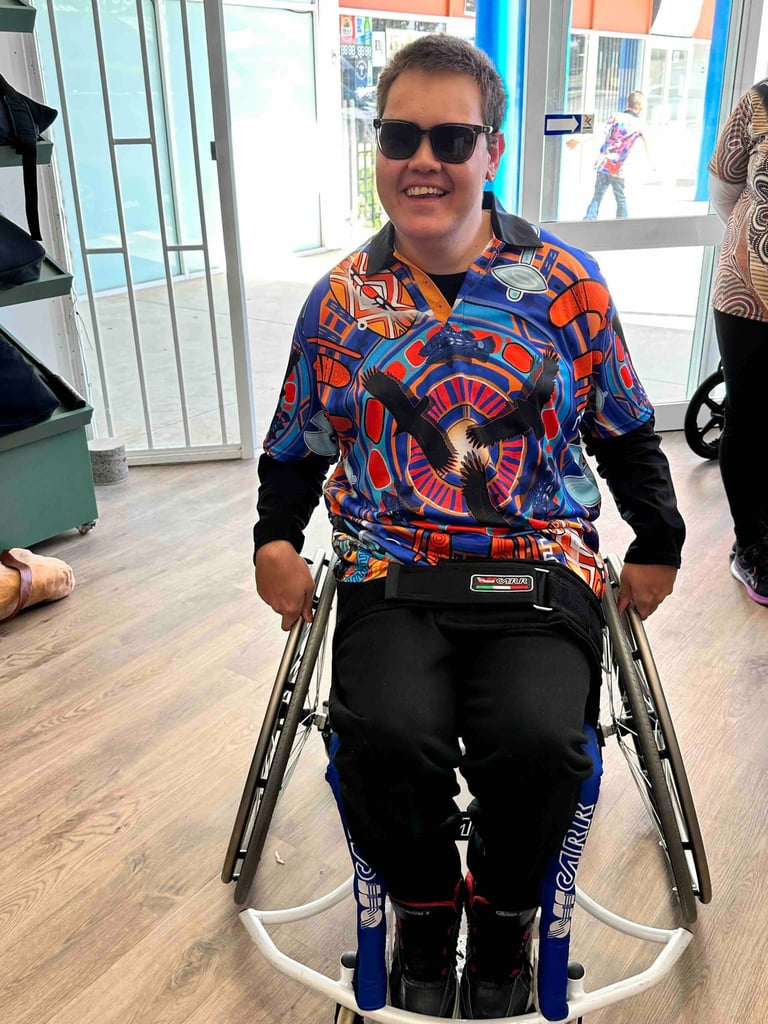
My journey with Cory began long before Eyecare Support Worker Services ever existed.
At the time, I had just moved to South Hedland to be closer to my daughter. After a short stint outside the disability sector, I found myself drawn back to the industry that had shaped so much of my life a space I knew deeply, not just professionally, but personally. As a mother to twins, one of whom was born with Cerebral Palsy, disability support was never just a job to me. It was part of who I was.
I began supporting Cory regularly through an agency, assisting with daily living, personal care, community access, and all the small but meaningful moments that make up everyday life. Over time, a strong bond formed built on trust, laughter, shared challenges, and genuine connection. Eventually, Cory’s mum asked if I would consider supporting Cory independently on a permanent basis.
I said yes, and that decision changed everything.
I set myself up as a sole trader and committed fully to supporting Cory and his family. We did life together. From cooking meals and supporting independence at home, to beach drives that required a four-wheel drive (and occasionally ended bogged in the sand), our support relationship was grounded in choice, freedom, and shared joy. Cory wasn’t just receiving a service, he was living his life.
As time went on, I began hearing more stories. Stories of unsuitable services, unmet needs, and participants being left behind by systems that were meant to support them. Watching this unfold, and drawing from my own experience advocating tirelessly for my own child, something shifted in me. I knew I wanted to do more. I wanted to create a service that truly listened, advocated, and stood beside participants and their families especially when systems failed them.
Cory’s Story: Advocacy, Trust, and the Power of the Right Support
Parents Perspective
Raising a Son with Disability, Rebuilding Through Trauma, and Learning the Power of the Right Support
When my son Cameron was born, I didn’t know the journey ahead of us. At six months old, we were told he had cerebral palsy. The language used back then was harsh and limiting. We were told he would likely never sit, walk, talk, or feed himself independently. The future painted for us was small. But Cameron had other plans.
Challenging What We Were Told
He started reaching milestones in his own way. He commando crawled. He progressed slowly but steadily. I physically lifted and supported him until he was nearly 20 years old. Every transfer, every therapy session, every school meeting — I was there. We fought to have him moved from special education into mainstream schooling. We refused to let prognosis define potential. Today, Cameron lives independently in his own home. That independence did not happen by accident. It happened through relentless advocacy, long-term therapy, and structured support.
The Hard Lessons No One Talks About
There were years when I was exhausted. When you are caring for a child with high needs, you don’t stop. You don’t clock off. And when funding is uncertain or cut, the pressure increases. In moments of exhaustion, I trusted people I should have vetted more carefully. As a result, Cameron experienced abuse from a support worker I believed I could trust. That experience changed us forever. It took years of counselling for Cameron to recover. It took strength, legal action, and painful self-reflection for me to rebuild trust in systems and in myself as a parent. What I learned is this: good support is not optional — it is protective.
Rebuilding with Structure and Safeguards
Today, support in Cameron’s life looks very different.He chooses his support workers through meet-and-greet interviews. They are carefully vetted, monitored, and regularly trained. They work for him — not the other way around. He directs his day. He attends basketball, football, cricket and netball games.
He participates in physiotherapy twice weekly to maintain mobility. He manages his home. Cameron is not defined by his disability. He is a well-balanced, independent adult — supported independence, but independence nonetheless.
The Impact on Families
What many people don’t see is the impact disability has on the whole family. It affects marriages. It affects siblings. It affects finances, housing, and emotional wellbeing. Cameron has a twin sister. As parents, we tried to give both children what they needed. But the reality is that high physical care demands pull time and energy. As siblings grow older, the emotional impact becomes visible. This is not about blame. It is about acknowledging reality. Families require support too. When parents are supported, children are safer. When funding is stable, trust is stronger. When systems listen, families survive — and thrive.
My Own Disability and Transitioning from Sole Carer
For 33 years, I was Cameron’s sole primary carer. I lifted him, transferred him, supported his physical care daily. Over time, that physical demand took a toll on my body. I have since undergone lower spinal fusion surgery and live with degenerative issues in my middle and cervical spine. I can no longer physically provide the manual care I once did. That transition was confronting — but necessary. Employing properly trained support workers was not a luxury. It was essential to protect both Cameron and myself.
What This Journey Taught Me
I learned that:
Independence is often supported independence.
Exhausted parents need structured, safe help.
Trust must be earned, not assumed.
There is always another avenue, even when systems feel overwhelming.
It takes a team — not just a parent.
Most importantly, I learned that families navigating disability are not alone — even when it feels that way.
Why I Do This Work
Our lived experience shaped how we now deliver services. We understand the exhaustion. We understand the fear. We understand the funding battles. We understand what happens when safeguards fail. And we understand what is possible when supports are done properly. Cameron’s story is not just about disability.
It is about resilience, accountability, structure, and belief. With the right team, the right safeguards, and the right advocacy, independence is achievable.
If you are a parent walking this path, know this: You are not failing. You are carrying more than most people ever see. And with the right support around you, your child — and your family — can build a life of dignity, stability, and possibility
You Don’t Have to Navigate This Alone
If you are a parent feeling overwhelmed, exhausted, or unsure where to turn — I understand. Our services were built from lived experience, not theory. We prioritise:
Safe, carefully vetted support workers
Participant-led decision making
Structured safeguarding practices
Genuine listening to families
Advocacy when systems feel overwhelming
If you would like support that understands both the practical and emotional realities of disability care, we welcome a conversation.
Reach out today for a confidential discussion about how we can support your family.